

Specialty coffee Bangkok hits differently at seven in the morning, when the city's humidity wraps around you like a second skin and the first sip of something carefully, intentionally brewed cuts clean through the heat. Bangkok has quietly, then loudly, transformed itself into one of the most dynamic specialty coffee cities in all of Asia, drawing roasters, baristas, and curious drinkers into a scene that rewards exploration with every visit. Whether you are an expat chasing the ritual you left behind in Melbourne or Berlin, a Thai coffee lover who has grown past the instant sachet, or simply someone who wants their morning cup to mean more, Bangkok in 2026 is a city that will meet you exactly where your palate lives.
How Bangkok Became a Specialty Coffee Destination
A decade ago, coffee culture in Bangkok was largely split between two extremes: the ubiquitous street-side vendor pouring sweetened Thai iced coffee through a plastic bag, and the international chains occupying every mall corner. Both had their charm, but neither spoke to the growing appetite for traceability, craft, and genuine flavour complexity. Then something shifted. Young Thai entrepreneurs who had trained in Melbourne, Tokyo, and Copenhagen returned home with a vocabulary for single-origin, a taste for natural process, and a drive to build something rooted in local pride. The specialty coffee Bangkok scene was born not from imitation but from translation, a genuine desire to bring world-class standards into a city that already understood hospitality at its finest.
The geography of Bangkok's coffee culture is as layered as the city itself. Neighborhoods like Ari, Thong Lo, and Ekkamai became early epicenters, their leafy streets filling with minimalist cafes where pour-overs are timed with the precision of a Swiss watch. Silom and Sathorn followed, offering the professional class their afternoon filter alongside co-working table space. More recently, areas like Itsaraphap and Talat Noi have drawn the creative crowd, mixing exposed brick, local art, and carefully sourced beans into something that feels both deeply Bangkok and genuinely global. The scene is not concentrated in one pocket of the city; it spreads like the river that bisects it, finding its way into every corner.
What drives this growth is a maturing consumer. Bangkok's specialty coffee drinkers in 2026 are asking better questions: Where was this bean grown? At what altitude? Who processed it, and how? These are not pretentious questions; they are the natural evolution of curiosity, the same curiosity that drives a food lover to seek out a grandmother's recipe rather than a chain restaurant. Specialty coffee, at its core, is an act of respect, for the farmer, for the terroir, and for the person who will eventually sit down, breathe in the aroma, and take that first sip.
The Flavour Map: What Bangkok's Coffee Scene Tastes Like
One of the most exciting aspects of the Bangkok specialty scene is its sheer diversity of flavour. You will find roasters who lean into the crisp, jasmine-floral notes of northern Thai arabica from Chiang Rai and Doi Chang, beans grown at elevations that deliver a brightness and sweetness rivaling anything from Ethiopia's Yirgacheffe region. Alongside these, you will encounter natural-processed Ethiopian lots with their intoxicating blueberry and red wine depth, washed Colombian beans offering clean caramel and almond structure, and experimental anaerobic lots that push the boundaries of what coffee is even supposed to taste like. Bangkok's cafes are not curating just one vision; they are collectively building a library of flavour that any serious coffee lover could spend months exploring.
Within this landscape, spiced coffee has found a natural and enthusiastic home. Bangkok's palate, shaped by centuries of aromatic Thai cuisine and a longstanding appreciation for fragrant herbs and warming spice, is remarkably receptive to coffee that carries a secondary sensory dimension. Cinnamon, cardamom, and ginger-forward blends resonate here in a way they might not in more spartan, purity-focused coffee cultures. This is precisely where SAFAR Coffee enters the story with a perspective that feels both foreign and immediately familiar: the ancient spice-trading traditions of the Middle East and Morocco, reinterpreted for a Bangkok afternoon.
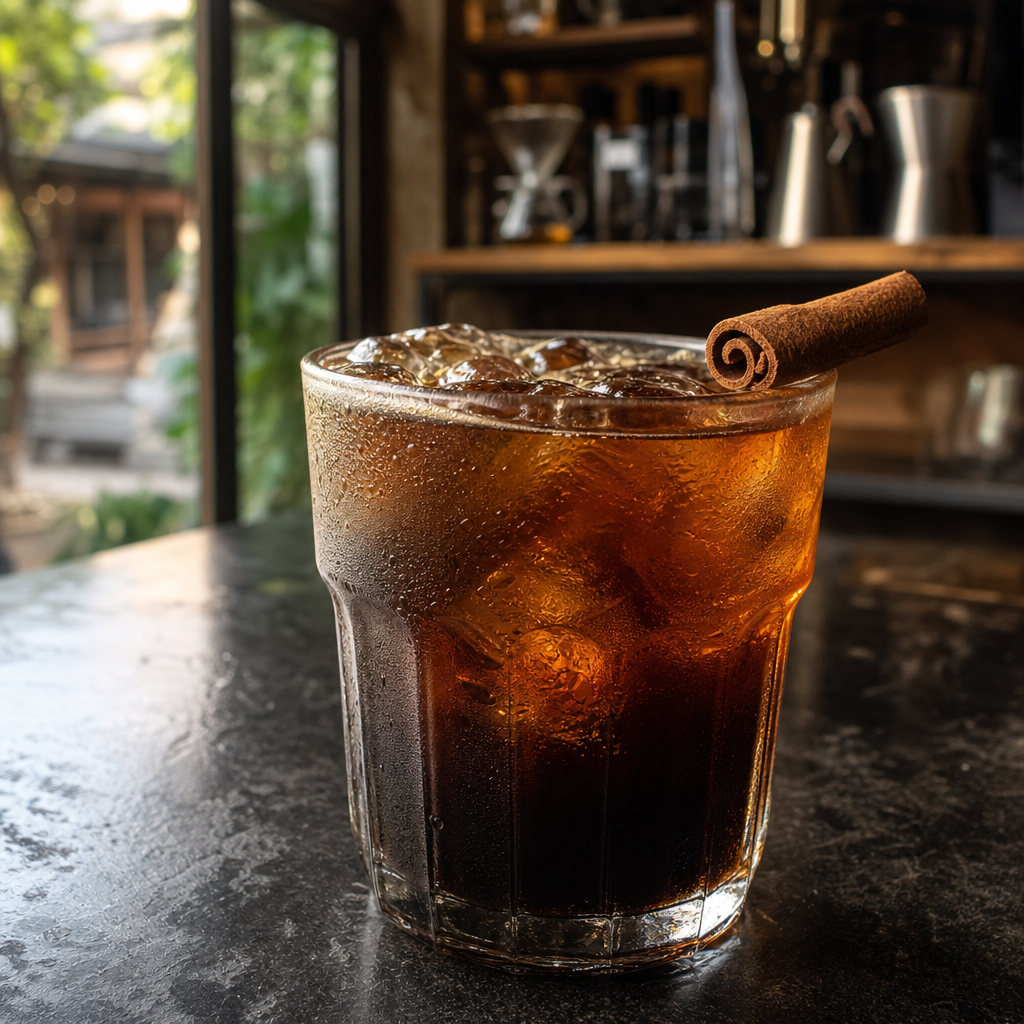
The humidity of Bangkok also shapes how people experience coffee throughout the day. Iced coffee is not a trend here; it is a necessity and a genuine art form. Specialty cafes pour their carefully brewed filters over ice, letting the flavour concentrate in ways that unlock sweetness and body. In this context, spiced blends perform beautifully, their aromatic compounds holding their structure even over ice, offering a depth that plain black coffee sometimes loses in the dilution. Bangkok's climate, rather than being an obstacle to specialty coffee enjoyment, has become one of the scene's most defining creative constraints.
Coffee as Culture: Community and Ritual in the City
What makes specialty coffee in Bangkok more than just a transaction is the culture that has grown around it. The city's cafes function as third spaces in the truest sense: places where freelancers set up for the day, where friends decompress after long commutes on the BTS, where couples choose weekend brunch not for the food but for the beans on offer. There is a social grammar to Bangkok's coffee culture, a shared understanding that ordering a single-origin pour-over is a kind of statement, an expression of values around slowness, quality, and presence.
This culture extends into gifting, which has always been central to Thai social life. Specialty coffee has become one of Bangkok's most considered gifts, offered at housewarming gatherings, corporate thank-yous, and the kind of Songkran and New Year exchanges where the gesture matters as much as the object. A beautifully packaged bag of specialty ground coffee communicates something that a bottle of wine or a box of chocolates cannot quite reach: it says that you know this person's mornings, that you care about how they begin their day. It is intimate in a very particular way.
The nomadic spirit also runs through Bangkok's coffee community in ways that mirror SAFAR's own founding story. A significant portion of the city's specialty coffee devotees are people in motion: digital workers who split their year between Bangkok, Bali, and Lisbon; Thai professionals who studied abroad and returned with changed tastes; expats who have made the city their long-term home while maintaining a cultural restlessness that keeps them curious. For this community, coffee is not just a beverage but an anchor, a portable ritual that grounds them wherever they happen to open their laptop or unpack their bag.
Brew It with SAFAR
If you want to bring the spirit of Bangkok's specialty scene into your own kitchen or apartment balcony, the approach is simpler than it sounds. Start with water heated to around 93 degrees Celsius, a temperature that coaxes sweetness without bitterness from high-quality arabica. Use a ratio of roughly 15 grams of coffee to 250 millilitres of water for a pour-over, or simply drop a Marrakesh Coffee Drip Bag over your cup for an effortless, travel-ready brew that starts at just ฿60 per bag. The drip bag format is particularly beloved by Bangkok's on-the-go drinkers: no grinder, no scale, no cleanup, just a precise, aromatic cup wherever you happen to be.
For those who want to invest in the full sensory experience at home, the Marrakesh Cinnamon Blend, starting at ฿495, is ground and ready for your preferred brew method. Over ice, it becomes something remarkable: the Ceylon cinnamon opens up with a gentle warmth that doesn't fight the cold, and the arabica base delivers a sweetness that makes you reach for a second glass before the first is even finished. This is specialty coffee with a sense of place and a sense of journey, which feels entirely right for a city that has never stopped moving. Order yours at safar.coffee and taste the difference for yourself.